What 6 Years of 30-Minute Mandarin Practice Looks Like in Shanghai
Most people think language learning happens in a classroom.
But last week in Shanghai, I spent the day with a 69-year-old guest from the US who reminded me that language is really built through curiosity, consistency, and courage.
For the past 6 years, he has been learning Mandarin almost every single day.
30 minutes of self-study daily.
One lesson every week.
No Chinese family background.
No business pressure.
Just one reason:
A close Chinese friend who inspired him to understand China more deeply.
And honestly, this is something I see more and more in 2026.
People are no longer learning Mandarin only for exams or business deals.
They are learning because they genuinely want connection.

NanNan’s Walking Lens
Shanghai Became His Mandarin Classroom
Instead of sitting inside a café doing textbook dialogues, we turned Shanghai itself into the lesson.
We walked through local parks, speaking Mandarin while listening to uncles chatting nearby, aunties dancing, and retirees practicing tai chi.
Not “perfect Mandarin.”
Real Mandarin.
The kind people actually use in daily life.
Then we visited Yu Garden to explore Jiangnan architecture, classical Chinese garden design, and the stories behind traditional Chinese aesthetics.
For Mandarin learners, this changes everything.
Because suddenly vocabulary is no longer abstract.
Words like:
假山 (jiǎshān — artificial rock mountain)
长廊 (chángláng — long corridor)
锦鲤 (jǐnlǐ — koi fish)
庭院 (tíngyuàn — courtyard)
become visual, emotional, and memorable.
Later, we walked through the Former French Concession — not as tourists, but as observers of daily life.
Not checking landmarks off a list.
But seeing:
where locals buy breakfast,
where elderly people gather,
how neighbors interact,
what modern Shanghai actually feels like outside the tourist bubble.
This is the part many visitors miss.
China is not only famous landmarks.
It is everyday life.
And for Mandarin learners, everyday life is where confidence grows fastest.
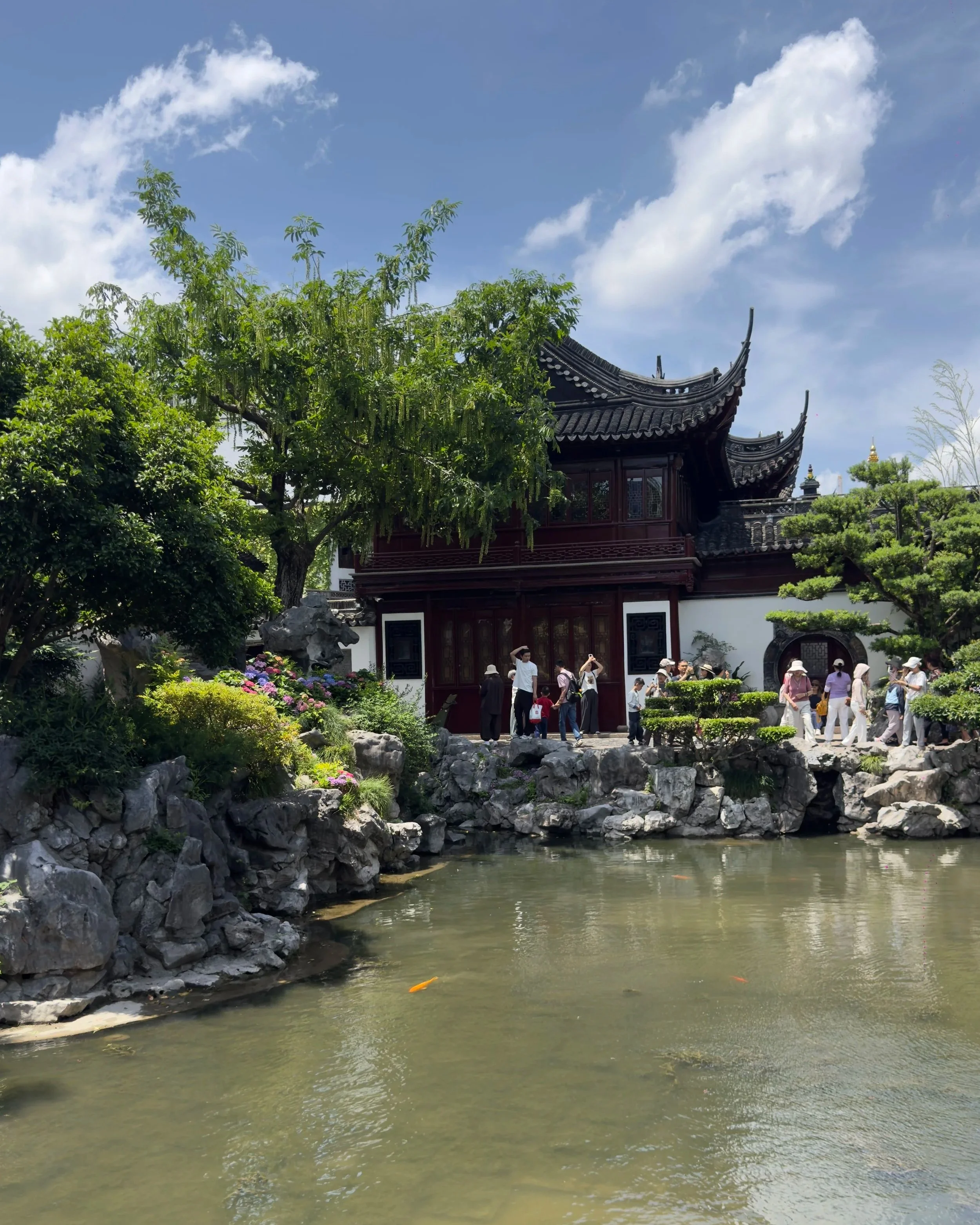
Shanghai Garden
Vegetarian Food in China: Is It Really Difficult?
One conversation we kept returning to during the tour was vegetarian food in China.
As someone who has lived in Shanghai for years and traveled all across China, I think this topic is interesting because vegetarian culture in modern China is changing very quickly.
Yes — vegetarian food can sometimes be tricky.
Not because people don’t understand vegetarianism, but because Chinese cooking culture traditionally uses ingredients like:
pork oil,
meat broth,
small meat pieces for flavoring,
hidden ingredients inside vegetable dishes.
So sometimes a dish that looks vegetarian may not actually be fully vegetarian.
But at the same time, finding vegetarian food in China today is much easier than many foreigners expect.
Why Vegetarian Restaurants Are Growing in China
There are several reasons behind this trend.
1. Buddhism and Temple Culture
More people in China have started exploring Buddhism and spiritual practices.
Around temples, it is now very common to find vegetarian restaurants, temple cuisine, and Buddhist-style food experiences.
Some temple restaurants are honestly incredible.
2. Health Awareness
Many younger Chinese people are becoming more health-conscious and lighter eating styles are becoming more popular in major cities like Shanghai, Beijing, and Shenzhen.
3. Animal Protection Awareness
There is also growing awareness around sustainability and animal welfare, especially among younger generations.
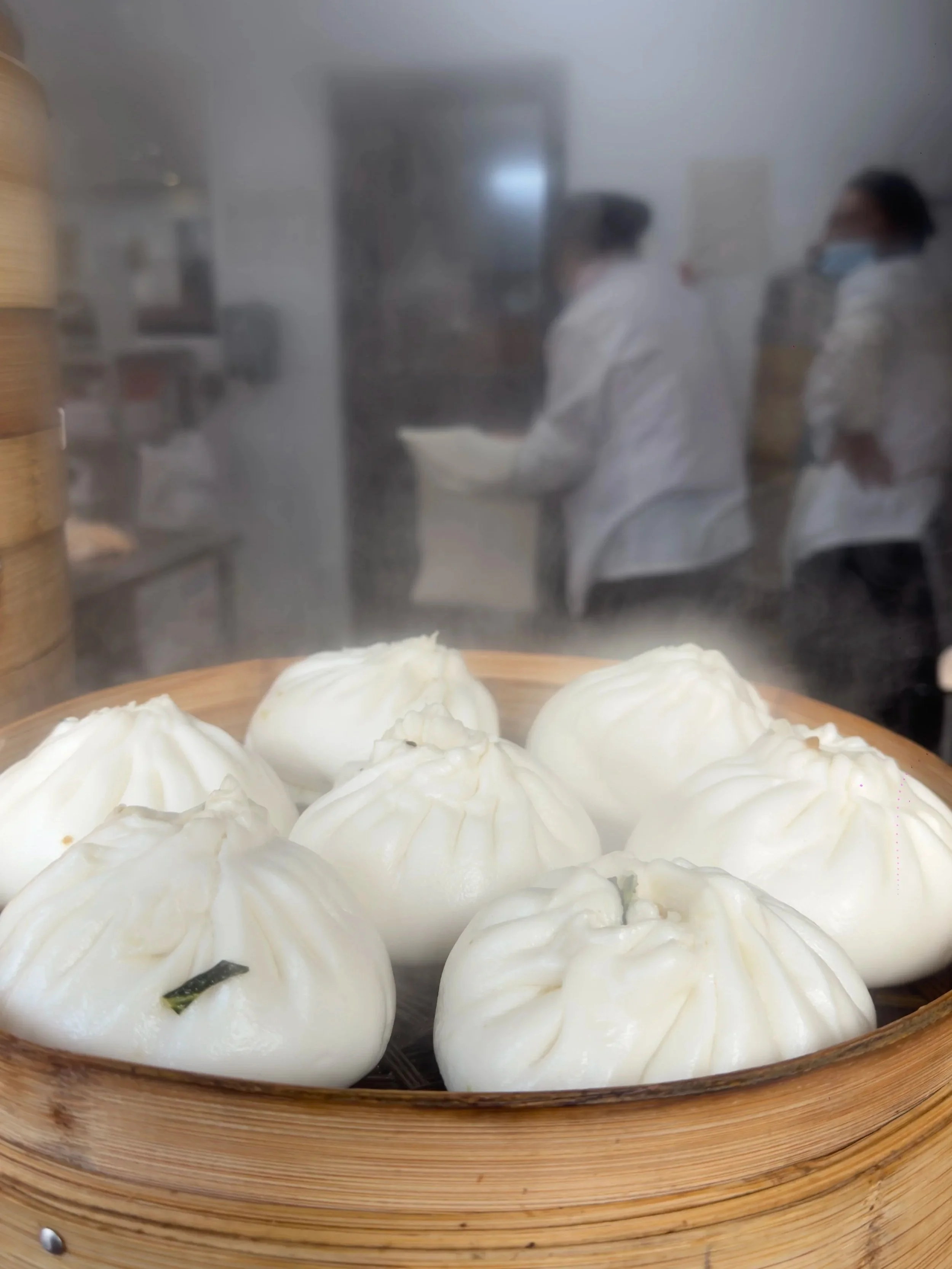
vegetarian buns
How to Find Vegetarian Food in China
1. Use Amap Instead of Google Maps
If you travel in China, downloading Amap (高德地图) is extremely important because Google Maps often does not work properly in China.
Search:
素食
(sùshí — vegetarian food)
and you can usually find nearby vegetarian restaurants, especially in downtown Shanghai.
2. Use Simple Mandarin Sentences
If you don’t speak Mandarin yet, you can show these sentences directly to restaurant staff:
我吃素,你有素菜吗?
Wǒ chī sù, nǐ yǒu sùcài ma?
I’m vegetarian. Do you have vegetarian dishes?
我要炒蔬菜,不要猪油,不要肉。
Wǒ yào chǎo shūcài, bú yào zhūyóu, bú yào ròu.
I want stir-fried vegetables, no pork oil, no meat.
你有清汤吗?
Nǐ yǒu qīngtāng ma?
Do you have clear soup / non-meat broth?
And honestly?
Most local restaurants will genuinely try to help you.
3. Be Brave and Speak Mandarin
One thing I always tell Mandarin learners:
People appreciate effort more than perfection.
Even simple Mandarin can completely change your experience in China.
A small interaction at a restaurant, market, or park can suddenly become a real cultural exchange.
And this is exactly why immersive Mandarin experiences matter.

Talking to Robot
China Becomes Different When You Participate
What stayed with me most about this experience was not the sightseeing.
It was watching someone at 69 years old still actively learning, still curious, and still willing to speak Mandarin with strangers.
That mindset changes travel completely.
Because China becomes much more interesting when you participate instead of only observe.
And honestly, I really hope more people experience China this way.
Not only through famous attractions, but through conversations, food, parks, neighborhoods, stories, and human connection.
If you are learning Mandarin, planning to visit Shanghai, or simply want support navigating real-life conversations and local culture in China, I’d be happy to help you experience the side of China most tourists never see.
